Dubai STR and Regional Conflict: Critical 2026 Review
How does regional conflict affect Dubai STR pricing? A four-condition framework tested against H1 2026 data — 56.4% occupancy, ADR AED 701, ceasefire collapse.

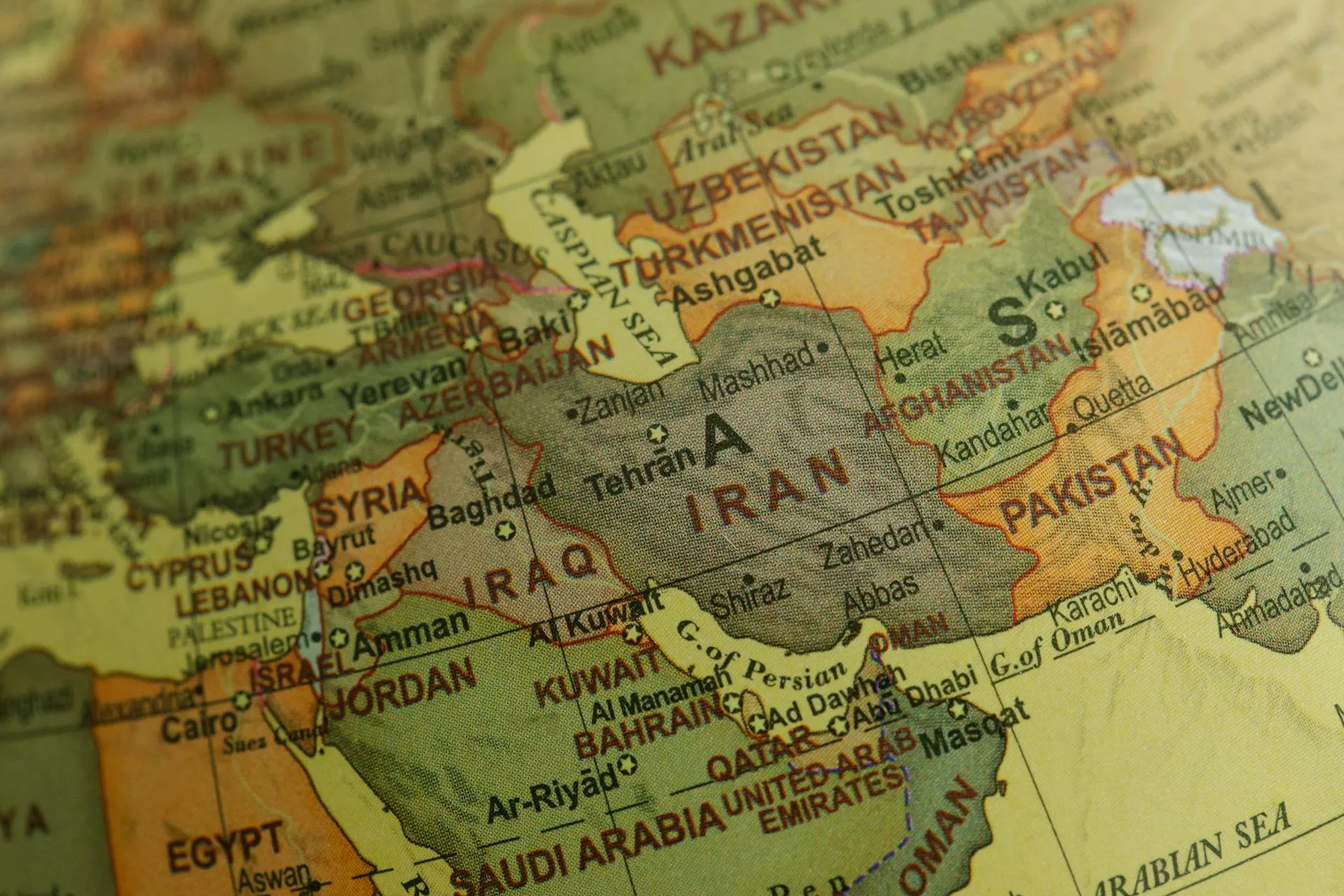
The bottom line: Dubai’s long-term safe-haven thesis faces its most direct test since the 2026 conflict began. The April ceasefire collapsed by July. The UAE’s own retaliatory strike on Iran’s Lavan Island refinery shifted it from non-belligerent observer to documented participant. H1 2026 hotel occupancy fell to 56.4 percent, STR median booked price dropped from USD 210 to the USD 120-130 range, and EASA now covers UAE airspace at all altitudes. The medium-term recovery case still exists — sovereign ratings hold, capital inflows continue, winter seasonality ahead — but the short-term shock is deeper and longer than the April 2026 version of this article projected.
Key takeaways
- The situation has worsened since April 2026. The ceasefire announced on 8 April held briefly, then collapsed by July when Iran struck commercial vessels. The June 17 memorandum of understanding, intended to bring the conflict to a formal end within 60 days, failed. EASA re-issued a Conflict Zone Information Bulletin covering UAE airspace at all altitudes on 14 July1. The Scenario A recovery envelope projected in the original version of this article has not materialised.
- The UAE’s non-belligerent status is now contested. The Wall Street Journal reported that the UAE secretly conducted an airstrike on Iran’s Lavan Island refinery on 8 April 20262. Iran responded with retaliatory missile and drone attacks explicitly citing the Lavan strike. At least 11 people have been killed on UAE soil3. The “neighboring but uninvolved” framing in the April version of this article was accurate at the time of writing; it no longer describes the documented evidence as of mid-2026.
- H1 2026 actual data confirms the shock. Hotel occupancy fell to 56.4 percent (from 81 percent in H1 2025), a 30.3 percent decline4. ADR fell to AED 701, down 7 percent year-over-year5. RevPAR dropped more than 35 percent5. Moody’s forecast Q2 2026 hotel occupancy as low as 10 percent6. Dubai real estate recorded AED 286.43 billion in H1 2026 — the second-highest H1 ever, but down from AED 326.6 billion in H1 20257.
- Current STR data is what operators feel. About 250,000 short-stay bookings cancelled in March 2026, plus 80,000 in the first week of April8. The median STR booked price dropped from USD 210 in January to USD 125 in April and has held in the USD 120-130 range through August8. Demand for 29+ day stays more than tripled year-over-year. The market remains in displacement-housing mode.
- The four-condition framework now shows 1 break, 2 stressed, 1 holding. Airspace has degraded from stressed to broken (EASA CZIB at all altitudes). Geographic separation has degraded from holding to stressed (civilian casualties, documented strikes on hotels, airports, energy facilities). Carriers remain stressed. Sovereign trust holds — Moody’s affirmed Aa2 stable on 30 March 20269.
- Through both 2024 Iran-Israel kinetic exchanges, all four conditions held for the UAE. Dubai posted 18.72 million arrivals (+9% YoY)10. Property transactions hit AED 761 billion (+20%)11. Hotel occupancy reached 78 percent12. October 2024 was Dubai’s strongest October in 12 years13, the same month Iran fired about 200 ballistic missiles at Israel. That precedent set the expectation. 2026 broke it.
- The leading indicators move 2-4 weeks ahead of demand data. The chain runs insurance premium repricing → airspace NOTAM status → airline route suspensions → occupancy and ADR data. Emirates removed six international routes from its August 2026 schedule14.
Does the current Middle East conflict affect Dubai short-term rental pricing? It’s a market-data question, not a political one. Dubai’s long-term safe-haven and tourism resilience case still exists. But the 2026 situation is structurally different from past episodes. Aviation access has been hit directly. So has traveler confidence. And the UAE’s documented retaliatory strike on Iran’s Lavan Island2 has shifted the factual picture from “neighboring but uninvolved” to something more complex: officially non-combatant, but documented as an active participant.
The April 2026 version of this article assessed two of four framework conditions as stressed and two as holding. Five months of additional data and a collapsed ceasefire have degraded that assessment further. This update incorporates H1 2026 actual data, the ceasefire-to-MOU-to-collapse timeline, and the Lavan Island disclosure.
How did Dubai short-term rental perform during the 2024 Iran-Israel exchanges?
Through both 2024 kinetic exchanges Dubai posted record numbers. The conflict spikes left no detectable monthly footprint. In October 2024, the month Iran fired approximately 200 ballistic missiles at Israel15, Dubai posted its strongest October hotel performance in 12 years. Occupancy hit 82.2 percent, with peak Diwali-night occupancy of 92.9 percent and ADR of AED 1,04813.
The cumulative 2024 picture across three primary government and industry sources:
- 18.72 million international visitors (+9.15 percent YoY)10.
- AED 761 billion in property transactions (+20 percent value, +36 percent volume)11.
- 78 percent annual hotel occupancy at AED 690 ADR12.
2025 set fresh records. Dubai closed at 19.59 million arrivals (+5 percent YoY)16. Abu Dhabi DCT recorded 26.6 million visitors and AED 9.1 billion in hotel revenue (+19.5 percent) at 81 percent occupancy, with hotel revenue up 19.5 percent YoY17. Double-digit growth held YTD through August 202518.
Citation capsule: Dubai posted 18.72 million arrivals in 202410, AED 761 billion in property transactions11, and 78 percent hotel occupancy12. October 2024, the month of Iran’s ballistic missile barrage at Israel, was Dubai’s strongest October hotel performance in 12 years at 82.2 percent occupancy13.
Caveat on cross-market inference: The 2024 figures above are hotel, tourism, and real estate aggregates. They are not STR-specific. These four markets correlate but they do not move identically. Hotels can hold rates while STRs cut. Total arrivals can stay flat while STR booking windows compress. Capital flows can post records while operator yields fall. Don’t read current STR pricing health off a headline arrival or hotel number. The STR-specific evidence sits in the next section.
What does the current STR-specific shock look like?
The macro retrospective above describes the resilience case. The STR-specific data for 2026 describes a real shock that operators are absorbing in real time. Both can be true at once.
Start with the pre-shock baseline. Dubai STR sat at AED 638 ADR and 73 percent median occupancy across roughly 22,719 active listings (12 months through January 2026)19. Independent reads place 12-month ADR in a USD 228-273 band20,21. Annual revenue per listing ranges from approximately USD 18,894 to USD 25,816 depending on methodology and listing type. The spread reflects methodology differences. These are the numbers the conflict regime has now repriced.
The conflict-specific shock numbers, with explicit dataset and date stamps:
- Cancellations: approximately 250,000 short-stay bookings cancelled in March 2026, plus a further 80,000 cancelled in the first week of April8. The hotel comparator: ~80 percent room cancellation rate and 1 million airline passengers affected22.
- Booking-window compression: the median STR booking window contracted from 6 days (2025) to 3 days in March 2026, with the bulk of actualised bookings now arriving inside a 0-1 day window8. Pricing engines tuned to 2025’s curves systematically misprice during this regime.
- Demand-segment shift: requests for 29+ day stays more than tripled in March-April 2026 versus the same period 20258. The STR market temporarily operates as displacement-housing rather than as a pure tourist destination, regional residents and remote workers shifting in while leisure tourism exits.
- Industry guidance: Dubai industry bodies urged hotels to hold rates rather than cut23, on the historical observation that deep-discount episodes leave longer ADR scars than the trough itself.
- Macro-economic frame: regional travel and tourism damage from the war extends beyond the energy channel24; the sovereign incentive packages described later in this article were the policy response to exactly this shock.
H1 2026 actual performance
Five months after the initial shock, the aggregate numbers are in. Hotel occupancy fell to 56.4 percent in H1 2026, down from 81 percent in H1 2025 — a 30.3 percent decline4. Average daily rate fell to AED 701, down 7 percent year-over-year5. RevPAR dropped more than 35 percent5. Moody’s projected Q2 2026 hotel occupancy as low as 10 percent at the trough6.
The STR-specific picture is sharper. Median booked price fell from USD 210 in January to USD 143 in March and USD 125 in April, holding in the USD 120-130 range through August8. At the worst point STR occupancy collapsed to 17 percent with RevPAR at USD 228. The market segmented by property class: mid-market hotels outperformed luxury and upper-upscale, recording 65.7 percent occupancy versus 51.2 percent for luxury5.
Real estate transactions have held better than tourism. Dubai recorded AED 286.43 billion across 86,005 property sales in H1 2026 — the second-highest H1 in the emirate’s history, surpassed only by H1 2025’s AED 326.6 billion7. Capital flows are stickier than tourism bookings. That divergence is structural, not accidental.
Full-year 2026 hotel occupancy is forecast within a 60.4-66.2 percent range, with recovery momentum expected from Q4 as winter seasonality lifts demand4. Hotels have used the downturn productively: CoStar reports properties closing for renovation during the trough, positioning for the recovery.
Citation capsule: H1 2026 hotel occupancy fell to 56.4 percent from 81 percent in H1 20254. ADR dropped to AED 701 (−7 percent YoY)5. STR median booked price compressed from USD 210 in January to USD 120-130 through August8. Real estate held: AED 286.43 billion in H1 2026 property sales, second-highest H1 on record7.
What macro factors are driving the shock?
Regional tensions escalated on 28 February 2026 when the United States and Israel conducted strikes on Iranian territory. Iran responded with retaliatory attacks on multiple neighbouring states. The second-order effects on Gulf aviation and tourism source-market sentiment have been severe and sustained.
The ceasefire-to-collapse timeline
The conflict trajectory since this article’s original publication:
- 8 April 2026: ceasefire announced, mediated by Pakistan25.
- 8 April 2026 (same day): The Wall Street Journal later reported that the UAE secretly conducted an airstrike on Iran’s Lavan Island refinery, knocking out most of its capacity2. Iran retaliated with missiles and drones explicitly citing the Lavan strike.
- 21 April 2026: President Trump extended the ceasefire indefinitely25.
- 17 June 2026: mediators announced a memorandum of understanding intended to bring the conflict to a formal end within 60 days25.
- July 2026: conflict resumed after Iran struck three commercial vessels that bypassed its preapproved route. EASA re-issued a Conflict Zone Information Bulletin covering UAE, Bahrain, Kuwait, and Qatar airspace at all altitudes on 14 July1.
- 18 August 2026: UAE detected a “missile threat”; President Trump stated no talks were underway with Iran.
The ceasefire did not produce the de-escalation trajectory that Scenario A of this article originally projected. The MOU collapsed. As of late August 2026 the conflict remains unresolved.
The Lavan Island disclosure and non-belligerent status
The April version of this article described the UAE as “close to the conflict zone but not a party to it.” That framing was accurate based on publicly available information at the time. The Lavan Island disclosure changes it.
The documented facts: the UAE has been the country most heavily targeted by Iranian attacks during the conflict. At least 11 people have been killed and over 160 wounded on UAE soil3. Documented strikes have hit energy facilities, airports, and hotels26,2. The UAE’s retaliatory strike on Lavan Island places it as an active participant, not a non-belligerent observer. The UAE has not publicly acknowledged the strike. Officially it maintains non-combatant status.
For the four-condition framework, the Lavan disclosure means the framework’s premise — a neighbor-hub absorbing transmission from someone else’s conflict — requires qualification. The UAE is now simultaneously a hub absorbing transmission and a participant generating it.
Insurance and carrier repricing
Aviation insurance war-risk premiums have moved +50 percent to +500 percent across Middle East-routed carriers27. Hormuz shipping insurance has seen comparable repricing28,29. Emirates and Etihad cancelled 700+ flights in less than two weeks during the peak airspace-disruption window30. Emirates removed six international routes from its August 2026 schedule, including Algiers, Bahrain, Baghdad, Basra, Tehran, and Damascus14. FlyDubai operates at about 40 percent of pre-conflict capacity31.
EASA’s Conflict Zone Information Bulletin issued 14 July 2026 covers UAE airspace at all altitudes for EASA-regulated operators1. This is structurally different from a NOTAM: it applies to all EU-regulated carriers regardless of routing altitude.
Policy response
The UAE government has deployed two sovereign backstops:
- AED 1 billion package (effective 1 April 2026): three-month deferral of Tourism Dirham and hotel sales fees32.
- AED 1.5 billion package (approved 21 May 2026): Tourism Dirham and hotel sales fee exemptions (not just deferrals), DET holiday home licence fee exemptions, event permit fee exemptions, and reduced fees for tour guides and desert safari activities33.
The second package escalated from deferral to exemption — a stronger fiscal signal that the first package was insufficient.
What four structural conditions determine whether regional conflict transmits to STR?
Across the closest historical cases, four conditions decide whether regional conflict damages a neighboring destination’s tourism. When all four hold, demand shifts rather than collapses. When any one breaks, the regional-stability narrative cracks fast.
The four conditions are:
- Airspace open: main commercial routes uninterrupted.
- Major carriers operating: flag-carrier networks not suspended.
- Violence geographically isolated from primary tourist corridors.
- Sovereign trust intact: credit rating, banking access, and FX freedom preserved.
April 2026 assessment (original article): two stressed, two holding. In Dubai 2024 and Cyprus 2024 all four conditions held throughout, and both posted records. In Dubai early 2026 conditions one and two were stressed: airspace by Iran/Iraq/Kuwait FIR closures, carriers by 700+ Emirates and Etihad cancellations30. Conditions three and four remained preserved.
August 2026 reassessment: one broken, two stressed, one holding. Airspace has degraded from stressed to broken — EASA’s July 14 CZIB covers UAE airspace at all altitudes for regulated operators1, going beyond NOTAMs to effectively close European-regulated carrier access. Geographic separation has degraded from holding to stressed — at least 11 people killed on UAE soil3, documented strikes on Fujairah port, Jebel Ali, Burj Al Arab, Fairmont Palm Jumeirah, and DXB airport26,2. Sovereign trust holds: Moody’s affirmed Aa2 with stable outlook on 30 March 20269, S&P affirmed AA on 6 March34, and Fitch maintained AA34. Carriers remain stressed: Emirates removed six routes from August 202614, FlyDubai at about 40 percent capacity31.
In the Egypt 2011 reference case three of four conditions broke. Recovery to 2010 baseline took until 201935. Dubai mid-2026 sits between the 2024 all-hold precedent and the Egypt 2011 breakdown — closer to Egypt than it was five months ago.
How do tourism flight and capital flight respond differently?
Tourism flight and capital flight respond on different time horizons. Tourism is reactive. Capital is sticky. The UAE attracted approximately 6,700 net millionaires in 2024, the largest single-jurisdiction inflow worldwide for the third year running, with a record 9,800 projected for 202536. Russian property purchases in Dubai since the 2022 invasion total approximately USD 6.3 billion37. Lebanese investors transacted AED 1.7 billion of Dubai property in 202438. Capital channel resilience underpins the sovereign trust condition.
Citation capsule: The four-condition framework I propose in this article specifies the conditions that determine whether regional conflict transmits to a non-belligerent neighbor’s tourism: airspace open, major carriers operating, violence geographically isolated, sovereign trust intact. Dubai 2024 and Cyprus 2024 both posted records with all four conditions holding. Dubai mid-2026 has one broken, two stressed, and one holding — degraded from the April 2026 assessment. Sovereign trust holds (Moody’s Aa2 stable9); airspace has broken (EASA CZIB at all altitudes1).
How do airport-targeted attacks specifically affect tourism?
Airport-targeted attacks are a deep-dive on the “carriers operating” and “airspace open” conditions of the framework. They divide into three tiers based on outcome, not on intent.
Tier one: intercepted or failed breaches
Tier one produces no measurable destination tourism impact. The Glasgow airport attack of 30 June 2007 (vehicle ramming, no successful breach, attacker-only fatality) produced no measurable UK tourism dip39. Saudi airport drone strikes 2019-2022 (Abha, Jazan, King Khalid) produced no measurable destination-level collapse40. The Abu Dhabi drone incident of 17 January 2022 did not derail UAE tourism recovery.
Tier two: successful breach without aircraft loss
Tier two produces 15-30 percent year-one tourism dips with 12-18 month recoveries. The Brussels Zaventem bombing of 22 March 2016 closed the airport for 11 days. Belgian national overnight stays returned to 2015 baseline by 2017, a 15-18 month recovery41. The Brussels-Capital Region itself remained 2 percent below 2015 levels in 2017; recovery was less complete in the airport-adjacent area than nationally. Istanbul Atatürk on 28 June 2016 closed the airport for only ~24 hours. Turkish foreign arrivals nonetheless fell to 25.4 million in 2016, down from a 2014 ten-year high of 36.8 million42, a roughly 30 percent peak-to-trough drop. Recovery began in 2017 despite a compounding coup attempt.
Tier three: aircraft-fatal incidents
Tier three produces 40-70 percent year-one dips with 4-6 year recoveries. The Sharm el-Sheikh / Metrojet 9268 case downed an Airbus A321 after departure on 31 October 2015. The kinetic event was off-airport but the airport-security regime was implicated. Russia’s flight ban was not lifted until August 2021, nearly six years later43. Egyptian arrivals fell 43 percent year-over-year44. The broader aviation-security regime analysis sits in45.
Plausible threat without breach: the Lebanon dynamic
Plausible-threat-to-airport without successful breach can produce 70-80 percent of breach damage. Lufthansa, Air France, Turkish, Qatar and others suspended Beirut flights July-September 2024; by 29 September all foreign carriers had suspended46. Lebanese arrivals fell 32.1 percent in 202447. Insurance and crew union pressure, not kinetic outcome, drove the cascade.
The DXB 16 March 2026 incident fits within tier two: successful breach with no aircraft loss. Carrier capacity floors30,31 show Emirates at 70-75 percent of pre-war capacity, Etihad at about 80 destinations, FlyDubai at about 40 percent and climbing. That’s a carrier-led demand floor. Emirates’ August 2026 schedule removes six routes entirely14, confirming the reduced-capacity plateau is persisting into the sixth month.
Citation capsule: Airport-targeted attacks divide into three tiers. Intercepted breaches produce no measurable destination tourism impact (Glasgow 2007, Saudi 2019-22, Abu Dhabi 2022). Successful breaches without aircraft loss produce 15-30 percent year-one dips with 12-18 month recovery (Brussels 201641; Istanbul Atatürk 201642). Aircraft-fatal incidents produce 40-70 percent year-one dips with 4-6 year recovery (Sharm el-Sheikh Metrojet 201545).
Which historical cases actually apply to UAE’s current position?
The historical case set divides into two structurally different groups. Conflating them produces misleading conclusions about what UAE 2026 trajectories should look like.
Group A: neighboring but uninvolved destinations. These are directly comparable — with a caveat that the Lavan Island disclosure places UAE in a more complex position than a pure Group A case. Cyprus during Israel-Hamas 2023-24 posted a record 4.04 million arrivals (+5.1 percent YoY)48, through neighboring conflict with all four conditions intact. Cyprus, Turkey, Georgia, Armenia and Dubai during Russia-Ukraine 2022 absorbed displaced demand and capital. Russians transacted USD 6.3 billion in Dubai property after the invasion37. The UAE during prior crises (Lebanon 2006/2019/2024, the Iran sanctions era, Iraq 2003) is the most direct precedent.
Group B: destination-affected cases. These are NOT directly comparable as base cases. Egypt 2011 took 8 years to recover to 2010 levels35. Sri Lanka 2019/22 took until 2024 to post a 2 million-arrival recovery49. Hong Kong 2024 arrivals of 44.5 million stayed 20.4 percent below 201950. These cases describe internal crises inside the destination itself.
The UAE’s mid-2026 position is drifting from Group A toward a hybrid. The framework still applies — the conditions still govern transmission — but the UAE is no longer a pure non-belligerent neighbor. It is absorbing direct kinetic impacts (Group B characteristic) while maintaining sovereign-trust resilience and capital-market function (Group A characteristic). Group A still informs the base case for recovery timing. Group B defines the downside if the remaining holding condition (sovereign trust) degrades.
Citation capsule: Neighboring but uninvolved cases consistently show 12-18 month recovery envelopes when the destination itself is not targeted. Cyprus during Israel-Hamas 2023-24 posted a record 4.04 million arrivals48. Destination-affected cases describe a different structural scenario: Egypt 2011 produced an 8-year recovery35, Sharm el-Sheikh 2015 produced a 6-year Russia ban45. The UAE’s mid-2026 position is drifting from pure Group A toward a hybrid with Group B characteristics.
How do the recovery scenarios look against actual H1 2026 data?
The three scenarios below were originally published in April 2026. This update adds a retrospective assessment against what has actually occurred.
Scenario A: de-escalation now (April 2026). Anchor: Cyprus during Israel-Hamas 2023-24 plus UAE’s own 2024 precedent. Original trajectory: acute trough in Q2 2026, climbing through Q3 2026, full recovery to 2025 baseline by Q2-Q3 2027 (12-15 month envelope). Retrospective: a ceasefire did occur on 8 April25, matching this scenario’s trigger. But it did not produce sustained de-escalation. Violations continued through the ceasefire period. The June MOU collapsed in July. Scenario A’s projected recovery curve has not materialised. H1 2026 hotel occupancy of 56.4 percent4 and STR median booked price of USD 120-1308 confirm the trough is persisting, not climbing.
Scenario B: de-escalation in 3 months (mid-2026). Anchor: Lebanon 2024. The transmission mechanism there was foreign-carrier suspensions cascading from threat-level perception, producing a 32 percent annual arrivals collapse47. Original trajectory: prolonged trough through Q2-Q3 2026, climb beginning Q4 2026, full recovery H2 2027 (15-21 month envelope). Retrospective: this scenario more closely describes the actual trajectory. The trough has persisted through Q2-Q3 2026. Whether the climb begins in Q4 depends on whether the MOU renegotiation produces a durable ceasefire. Full-year hotel occupancy forecast of 60.4-66.2 percent4 implies a partial Q4 recovery is priced into industry expectations.
Scenario C: de-escalation in 1 year (early 2027). No clean year-long Group A anchor exists at this duration. The closest blend is Lebanon’s repeated multi-cycle disruption layered onto extended Cyprus and Turkey envelopes. Original trajectory: 2-3 year recovery base case if four conditions hold; 3-5 year downside if they degrade. Retrospective: the conflict duration is tracking toward this scenario. Six months in, the MOU has collapsed, EASA has closed UAE airspace to regulated operators, and the geographic-separation condition has degraded. If the conflict extends past the six-month mark without a durable ceasefire, Scenario C becomes the operative framework. Triggers to watch: sovereign-trust pressure from rating-agency activity (none yet — Moody’s, S&P, and Fitch all stable9), an aircraft-loss event (tier three escalation), or a geographic-separation breakdown beyond isolated incidents.
Citation capsule: Three scenarios anchored to directly comparable historical cases. Scenario A (April 2026 de-escalation) projected a 12-15 month recovery; a ceasefire did occur on 8 April25 but collapsed by July — this scenario has not materialised. Scenario B (mid-2026) projects 15-21 months, anchored to Lebanon 2024’s 32 percent arrivals collapse47; this is closest to the actual trajectory. Scenario C (early 2027) is operative if the conflict extends: base case 2-3 years, downside 3-5 years if conditions degrade further.
What should an STR operator actually do right now?
This section is operator-facing and concrete. It assumes an active Dubai short-term rental portfolio, the mid-2026 conditions described above, and an owner deciding what to do this quarter rather than reading a macro essay.
1. Hold rates before you cut them, especially the headline ADR. The historical pattern across directly-comparable cases is consistent: deep-discount episodes leave longer ADR scars than the trough itself. Dubai industry bodies have urged hotels to hold rates23. Cyprus 2024 operators who held rates and waited captured the eventual snapback ADR; Sri Lanka 2019 operators who deep-discounted lost both yield and brand positioning. Practical implementation: protect the public-facing rate card; concede revenue through targeted promo codes, last-minute mobile-only fares, and length-of-stay discounts that segment rather than re-anchor the market. The operators who discounted to USD 120-130 through March-August are now the floor the market has to climb back from.
2. Re-tune for the 0-3 day booking window. Pricing engines tuned to 2025’s 6-day median curve are systematically mispricing now that the median has compressed to 3 days and bulk inventory clears inside 0-1 days8. Pre-build a “compressed-window mode” in your pricing rule set that activates on airspace stress: tighter restriction lead times, dynamic last-minute pricing, mobile-channel weighting. Pricing rules tuned for 60-90 day booking curves will leak revenue across both directions during the first 4-8 weeks of any kinetic event.
3. Activate a 29+ day stay product line. Demand for 29+ day stays more than tripled YoY8; the STR market is temporarily operating as a displacement-housing market rather than a tourist destination. The Tourism Dirham 30-night cap makes long-stay unit economics structurally favourable — and the AED 1.5 billion May 2026 package exempts Tourism Dirham and DET licence fees entirely33. From conversations with regional STR operators across April 2026, monthly-stay conversion is the single biggest yield-protective lever I’ve seen taken in this cycle. Concrete steps: enable monthly-stay listings on direct and OTA channels, set monthly-rate floors that protect equivalent nightly economics, and prepare a corporate-housing addendum (insurance, utilities allowance) for relocating regional residents and remote-work transients.
4. Read the actually-still-booking source markets. Indian travelers remain the dominant Dubai source market (DXB handled approximately 46 million passengers in H1 202551), and intra-GCC plus Russian and CIS demand has historically held during regional flare-ups. The risk-off segments are leisure travelers from Western Europe and East Asia where flight-route uncertainty hits booking confidence first. Concrete steps: lift OTA presence in Hindi, Russian, and Arabic; partner with regional hotels for displaced-guest overflow; do not lean heavily on European leisure marketing during the acute-phase trough. The EASA CZIB1 directly constrains EU-regulated carrier access — European source markets will be the last to recover.
5. Tighten cancellation policy at the segment, not portfolio, level. Forced free-cancellation policies destroy revenue when 250,000-plus bookings cancelled in a single month (March 20268). Concrete steps: keep flexible cancellation as a premium tier with a 10-15 percent rate uplift; default new bookings to non-refundable with strong upfront pricing; consider trip-disruption insurance bundling on the booking flow.
6. Build the cash runway and source-market diversification before you need them. Two structural defences carry across all comparable historical cases:
- Cash runway: 2-3 quarters of operating cash including DET licence, ejari, service charges, and platform-side held deposits. Sri Lanka’s tourism share of GDP fell from 5.6 percent (2018) to 0.8 percent (2020)49; operators without runway exited. The May 2026 DET licence fee exemption33 helps but is temporary.
- Source-country diversification: no single source above 30 percent of bookings. Cyprus 2024’s record built on UK at 33.9 percent plus diversified Israeli, US, and Lebanese contributions48.
7. Watch the upstream indicator chain, not headlines. The chain that moves 2-4 weeks before demand data confirms a regime change runs insurance premium repricing → airspace NOTAM status → airline route suspensions → occupancy and ADR data. Aviation war-risk premiums have already moved +50 to +500 percent across Middle East-routed carriers27. Recovery indicators run the chain in reverse: insurance premiums roll back first, NOTAMs lift second, carriers restore routes third, demand follows. Set explicit triggers — “when Emirates announces full schedule restoration on X routes, I shift back to leisure-marketing weighting and 60-day pricing curves” — rather than reacting to ad-hoc news cycles. The EASA CZIB lift1 is now the gating indicator for European carrier resumption.
8. Decide the operating-model question with eyes open. STR’s macro-risk exposure is the highest among Dubai operating models; long-term rental is the lowest. The 2026 shock makes that gap visible in real-time data. The question for an owner this quarter is whether the 7-dimension trade-off still works for the specific portfolio and personality. The seven-dimension STR vs LT decision framework covers macro exposure as one dimension among several; this is the dimension speaking loudest right now.
For the underlying operator-economic framework see the Dubai holiday home net yield walkthrough. For why the coordination-only property manager layer is structurally vulnerable to AI replacement see How AI Replaces STR Management Agencies.
The UAE held its position as a neighboring hub through several past regional crises. The four-condition framework I propose in this article (airspace open, major carriers operating, geographic separation, sovereign trust intact) is what decides whether regional conflict transmits to local STR pricing. In Dubai 2024 and Cyprus 2024, all four held. Both posted records through neighboring conflict. In Dubai mid-2026, one has broken, two are stressed, and one holds. The long-term thesis depends on whether the remaining conditions stabilise. The short-term shock is deeper than the April 2026 version of this article assessed. Operators are absorbing both at once.
The cases that apply directly are Group A: neighboring comparators — with the caveat that the Lavan Island disclosure places UAE in a more complex position. Group B (destination-affected cases) defines a downside envelope if sovereign trust degrades. For owners considering buying, the DET licensing guide walks the regulatory framework. For owners deciding between operating models, the seven-dimension STR vs LT decision framework covers macro exposure as one dimension among several. For Naiteshift’s pioneer program, I’m onboarding the first 20 portfolios at launch with hands-on setup. For author background, see the Tom Gratz author page.
This guide reflects publicly-available data and analyst commentary as of 27 August 2026. Pre-conflict economic forecasts (World Bank and IMF UAE GDP +5.0 percent 2026) were issued before the 28 February 2026 escalation and do not reflect war-impact revisions; treat as no-conflict counterfactuals rather than forecasts. The analytical framework takes no position on any political outcome. All claims carry numbered footnote markers; the full source list sits below. OSINT-derived figures are flagged as such in prose. Always verify current figures with the cited primary sources directly before underwriting a specific property.
Footnotes
-
EASA Conflict Zone Information Bulletin 2026-07-R1 — https://www.easa.europa.eu/en/domains/air-operations/czibs/czib-2026-07r1 ↩ ↩2 ↩3 ↩4 ↩5 ↩6 ↩7
-
Wall Street Journal / Wikipedia on the 2026 Lavan Island attack — https://en.wikipedia.org/wiki/2026_Lavan_Island_attack ↩ ↩2 ↩3 ↩4 ↩5
-
Gulf News UAE casualty tracker — https://gulfnews.com/uae/government/iran-attacks-in-uae-leave-11-dead-and-169-wounded-so-far-1.500487256 ↩ ↩2 ↩3
-
Khaleej Times H1 2026 hotel data — https://www.khaleejtimes.com/business/dubai-hotel-occupancy-to-recover-in-h2-2026-after-sharp-first-half-decline ↩ ↩2 ↩3 ↩4 ↩5 ↩6
-
IndexBox UAE Hospitality Report H1 2026 — https://www.indexbox.io/blog/abu-dhabi-leads-uae-hotel-occupancy-in-h1-2026-despite-revenue-dips/ ↩ ↩2 ↩3 ↩4 ↩5 ↩6
-
Skift / Moody’s Q2 2026 hotel occupancy forecast — https://skift.com/2026/05/06/dubai-hotel-occupancy-to-plummet-to-10-in-q2-moodys/ ↩ ↩2
-
Arabian Business Dubai real estate H1 2026 — https://www.arabianbusiness.com/real-estate/dubai-property-sales-h1-2026 ↩ ↩2 ↩3
-
RentalScaleUp’s Dubai STR market read — https://www.rentalscaleup.com/dubai-short-term-rental-market-2026/ ↩ ↩2 ↩3 ↩4 ↩5 ↩6 ↩7 ↩8 ↩9 ↩10 ↩11 ↩12
-
Arabian Business UAE Moody’s Aa2 rating — https://www.arabianbusiness.com/finance/uae-credit-rating-unchanged-at-aa2-as-moodys-flags-strong-reserves-low-debt-and-policy-strength ↩ ↩2 ↩3 ↩4
-
Dubai DET Annual Visitor Report 2024 — https://www.dubaidet.gov.ae/en/research-and-insights/-/media/files/faqs/annual-visitor-report-2024/det-annual-visitor-report-2024.pdf ↩ ↩2 ↩3
-
Dubai Land Department — https://dubailand.gov.ae/en/news-media/dubai-s-real-estate-sector-records-aed761-billion-in-transactions-in-2024 ↩ ↩2 ↩3
-
Cavendish Maxwell’s Hospitality Performance 2024 — https://cavendishmaxwell.com/insights/market-reports/hospitality/dubai-hospitality-sector-market-performance-2024 ↩ ↩2 ↩3
-
CoStar/STR data — https://str.com/press-release/dubai-hotel-occupancy-jumped-during-diwali ↩ ↩2 ↩3
-
Aviation A2Z Emirates August 2026 route suspensions — https://aviationa2z.com/index.php/2026/07/29/emirates-removes-6-international-routes-from-august-2026/ ↩ ↩2 ↩3 ↩4
-
House of Commons Library briefing CBP-10113 — https://commonslibrary.parliament.uk/research-briefings/cbp-10113/ ↩
-
DET Tourism Performance Report June 2025 — https://www.dubaidet.gov.ae/en/research-and-insights/tourism-performance-report-june-2025 ↩
-
Gulf News citing DCT — https://gulfnews.com/business/tourism/abu-dhabi-records-266m-visitors-in-2025-as-hotel-revenues-hit-dh91b-1.500497641 ↩
-
Knight Frank UAE Hospitality Market Review 2025 — https://www.knightfrank.ae/newsroom/article/2025/10/uae-hospitality-market-review-2025 ↩
-
Airbtics Dubai market data — https://airbtics.com/annual-airbnb-revenue-in-dubai-united-arab-emirates/ ↩
-
AirDNA’s Dubai market overview — https://www.airdna.co/vacation-rental-data/app/ae/default/dubai/overview ↩
-
AirROI’s Dubai dashboard — https://www.airroi.com/airbnb-data/united-arab-emirates/dubai/dubai ↩
-
Arab News — https://www.arabnews.com/node/2635103/business-economy ↩
-
AGBI’s coverage — https://www.agbi.com/analysis/tourism/2026/03/dubai-hotels-urged-to-hold-rates-after-iran-war-occupancy-drop/ ↩ ↩2
-
CNBC’s 22 April 2026 White House-UAE financial deal coverage — https://www.cnbc.com/2026/04/22/uae-economy-travel-tourism-dubai-abu-dhabi-war.html ↩
-
Wikipedia 2026 Iran war ceasefire — https://en.wikipedia.org/wiki/2026_Iran_war_ceasefire ↩ ↩2 ↩3 ↩4 ↩5
-
Bellingcat — https://www.bellingcat.com/news/2026/04/02/war-uae-iran-infuencer-dubai-conflict-drone-successful-strike-intercept-fire/ ↩ ↩2
-
Lockton — https://global.lockton.com/in/en/news-insights/marine-aviation-war-risk-premiums-rise-as-insurers-reassess-exposure-amid ↩ ↩2
-
the Strauss Center — https://www.strausscenter.org/strait-of-hormuz-insurance-market/ ↩
-
Lloyd’s List — https://www.lloydslist.com/LL1156485/Strait-of-Hormuz-transits-collapse-as-shipping%E2%80%99s-risk-appetite-is-tested ↩
-
Aviation Week — https://aviationweek.com/air-transport/airports-networks/how-middle-east-networks-are-being-disrupted-iran-war ↩ ↩2 ↩3
-
Gulf News — https://gulfnews.com/business/aviation/uae-regional-aviation-32-days-into-war-what-has-changed-what-travellers-need-to-know-1.500493343 ↩ ↩2 ↩3
-
Skift — https://skift.com/2026/03/31/dubai-hospitality-relief-iran-war-travel-collapse/ ↩
-
Dubai Media Office AED 1.5 billion second incentive package — https://mediaoffice.ae/en/news/2026/may/21-05/hamdan-bin-mohammed ↩ ↩2 ↩3
-
Gulf News citing sovereign credit ratings — https://gulfnews.com/uae/uae-retains-aa2-credit-rating-with-stable-outlook-with-global-confidence-in-its-economy-holding-firm-1.500496496 ↩ ↩2
-
World Bank arrivals data — https://data.worldbank.org/indicator/ST.INT.ARVL?locations=EG ↩ ↩2 ↩3
-
Henley Private Wealth Migration Report 2025 — https://www.henleyglobal.com/publications/henley-private-wealth-migration-report-2025 ↩
-
ICIJ — https://www.icij.org/news/2024/05/russians-bought-up-6-3-billion-in-dubai-property-after-2022-ukraine-invasion-report-finds/ ↩ ↩2
-
Veersant citing DLD data — https://veersant.com/blog/dubai-property-buyers-by-nationality-2025/ ↩
-
Scotsman — https://www.scotsman.com/business/glasgow-terror-attack-transformed-flying-forever-1446103 ↩
-
Arab News — https://www.arabnews.com/node/1920271/saudi-arabia ↩
-
Statbel — https://statbel.fgov.be/en/news/2017-tourism-belgium-recovers-its-2015-level ↩ ↩2
-
Statista’s Turkey tourism chart — https://www.statista.com/chart/10270/tourism-in-turkey/ ↩ ↩2
-
Times of Israel coverage — https://www.timesofisrael.com/liveblog_entry/russia-resumes-flights-to-egypts-red-sea-resorts-6-years-after-is-plane-bombing/ ↩
-
Carnegie Sada — https://carnegieendowment.org/sada/2015/12/struggles-for-egypts-tourism-sector?lang=en ↩
-
ICCT — https://icct.nl/publication/egypts-aviation-security-metrojet-bombing ↩ ↩2 ↩3
-
Crisis24 — https://crisis24.garda.com/alerts/2024/09/lebanon-authorities-confirm-suspension-of-all-foreign-carriers-flights-to-and-from-beirut-rafic-hariri-international-airport-as-of-sept-29 ↩
-
L’Orient Today — https://today.lorientlejour.com/article/1448628/lebanons-tourist-arrivals-drop-32-percent-in-2024.html ↩ ↩2 ↩3
-
Travel and Tour World — https://www.travelandtourworld.com/news/article/cyprus-sees-record-tourist-arrivals-with-high-spending-visitors-from-israel-lebanon-and-the-us-contributing-to-growth-in-limassol-nicosia-and-paphos/ ↩ ↩2 ↩3
-
ORF analysis — https://www.orfonline.org/expert-speak/how-tourism-in-sri-lanka-went-downhill ↩ ↩2
-
Hong Kong Free Press — https://hongkongfp.com/2025/01/16/hong-kong-fails-to-meet-tourism-forecast-as-it-logs-44-5-million-arrivals-in-2024/ ↩
-
Property Finder’s STR investor coverage — https://www.propertyfinder.ae/blog/short-term-rental-dubai/ ↩
Frequently asked questions
Did the 2024 Iran-Israel exchanges affect Dubai short-term rental pricing?
No, at monthly resolution. Through both the April 2024 and October 2024 kinetic exchanges, Dubai posted record numbers across every operator-relevant metric: 18.72 million international visitors in 2024 (+9.15 percent year-over-year per Dubai DET Annual Visitor Report), AED 761 billion in DLD property transactions (+20 percent per Dubai Land Department), and 78 percent average hotel occupancy per Cavendish Maxwell. October 2024 was Dubai's strongest October hotel performance in 12 years per CoStar/STR data.
Has the situation changed since the original April 2026 analysis?
Materially. The April 8 ceasefire collapsed by July 2026. The UAE was documented as having conducted a retaliatory strike on Iran's Lavan Island refinery (reported by The Wall Street Journal), shifting its status from non-belligerent to active participant. EASA issued a Conflict Zone Information Bulletin covering UAE airspace at all altitudes. H1 2026 hotel occupancy fell to 56.4 percent (from 81 percent in H1 2025), and STR median booked price dropped from USD 210 to the USD 120-130 range. Two of the four framework conditions have degraded further: airspace from stressed to broken, geographic separation from holding to stressed.
Is the UAE a party to the current Middle East conflict?
The UAE's position has evolved. Officially it maintains non-combatant status. However, The Wall Street Journal reported that the UAE secretly conducted an airstrike on Iran's Lavan Island refinery on 8 April 2026, around the time of the ceasefire announcement. Iran retaliated with missiles and drones explicitly citing the Lavan strike. At least 11 people have been killed and over 160 wounded on UAE soil by Iranian attacks. The operator-relevant question remains how the four conditions of the framework (airspace open, carriers operating, violence geographically separated from tourist corridors, sovereign trust intact) are stressed by events — and as of mid-2026, three of four are degraded.
Which historical conflict cases are actually comparable to UAE's current position?
The directly comparable cases are neighboring destinations during neighboring conflict: Cyprus during Israel-Hamas 2023-24, Cyprus and Turkey during Russia-Ukraine 2022, Cyprus during Lebanon 2024, and UAE itself during prior regional crises. Destination-affected cases (Egypt 2011, Tunisia 2015, Sri Lanka 2019/22, Hong Kong 2019) describe internal crises, not neighbor positions. They serve as downside-envelope reference points, not base-case anchors. The UAE's mid-2026 position is drifting from Group A toward a hybrid: officially a neighbor-hub, but absorbing direct kinetic impacts.
What's the realistic recovery timeline for Dubai tourism?
The April 2026 ceasefire did not produce sustained de-escalation. The ceasefire collapsed by July 2026 after Iran struck commercial vessels. The Scenario A envelope (12-15 month recovery from immediate de-escalation) has not materialised. The actual trajectory more closely resembles Scenario B (15-21 months) or Scenario C (2-3 years), depending on whether the conflict stabilises in H2 2026 or extends into 2027. H2 2026 hotel recovery is forecast within a 60.4-66.2 percent full-year occupancy range, with Q4 expected to benefit from winter seasonality. But these forecasts assume no further escalation.
What leading indicators should a Dubai STR operator actually watch?
Insurance premium repricing and airline route suspensions, not headlines. Aviation war-risk premiums up 50 to 500 percent across Middle East-routed carriers per Lockton consistently precede route suspensions by 1-2 weeks. Route suspensions then precede measurable occupancy and ADR damage by 2-4 weeks. The chain runs insurance → airspace status → route suspensions → demand. In mid-2026 the chain is playing out: EASA's July 14 CZIB covers UAE airspace at all altitudes, and Emirates removed six routes from its August schedule.